News
May 14th 2026 – Official launch of the CARCLIQUE Chair!
On May 14th, the official launch of the CARCLIQUE Chair took place at the Coeur des sciences of UQAM! For the occasion, many members of the chair were present, accompanied by staff members, professors, researchers, students, families and many others.
Congratulations to Scott J. Davidson and Michelle Garneau and the entire CARCLIQUE Chair team for this successful launch!
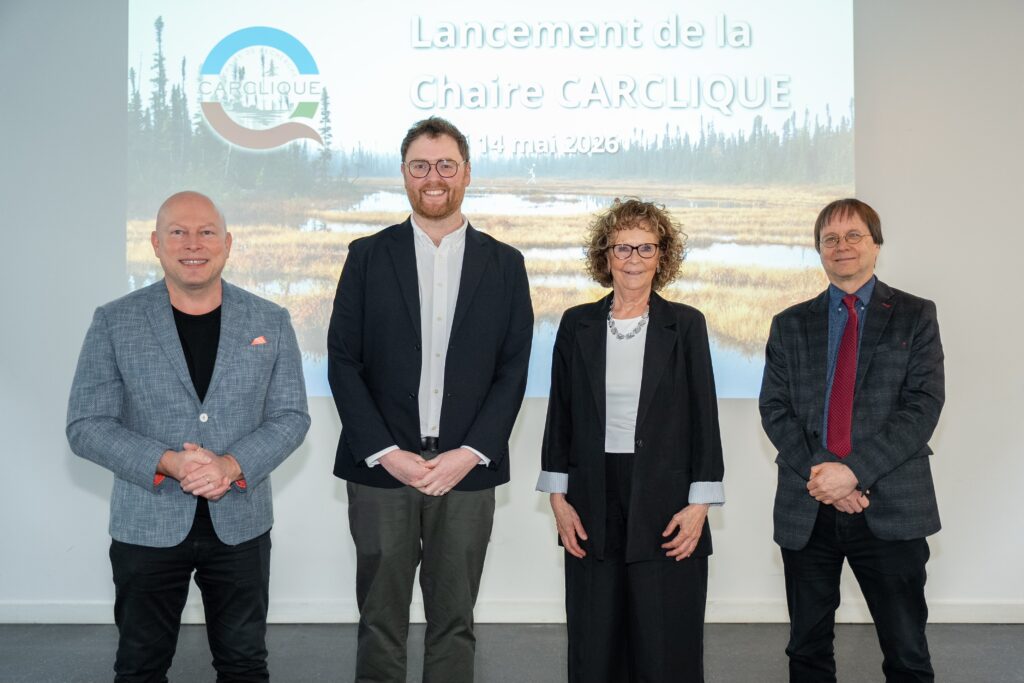
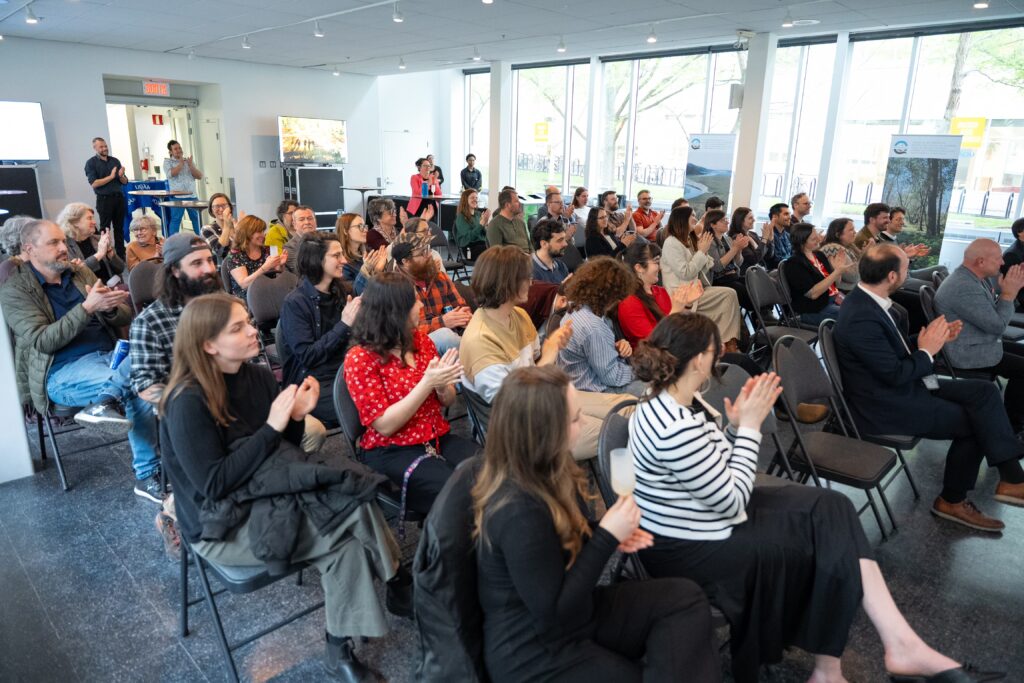
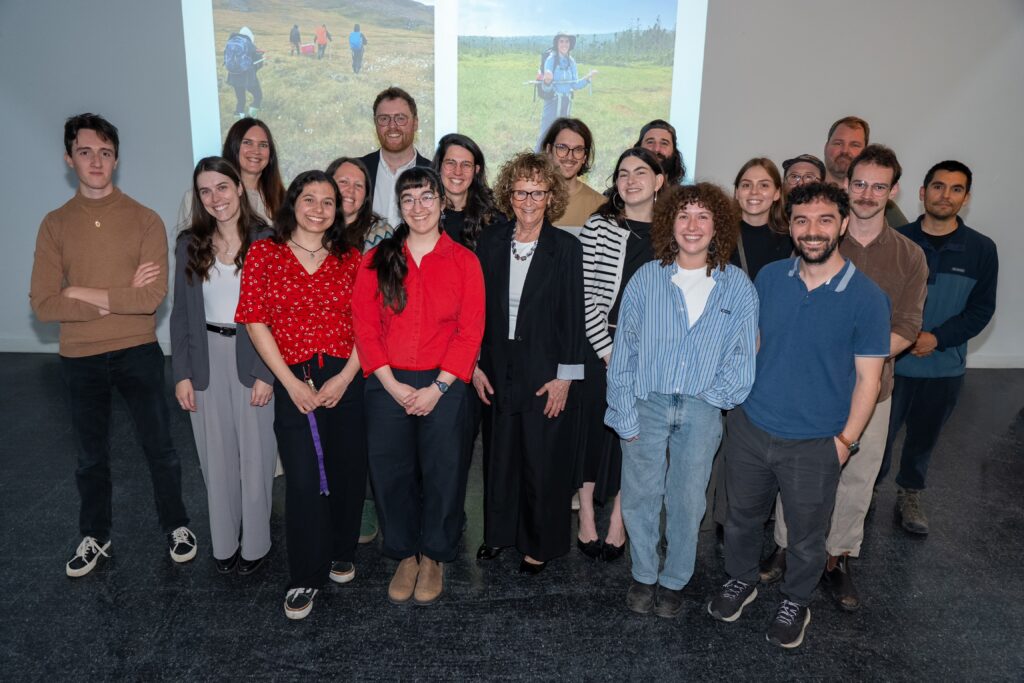
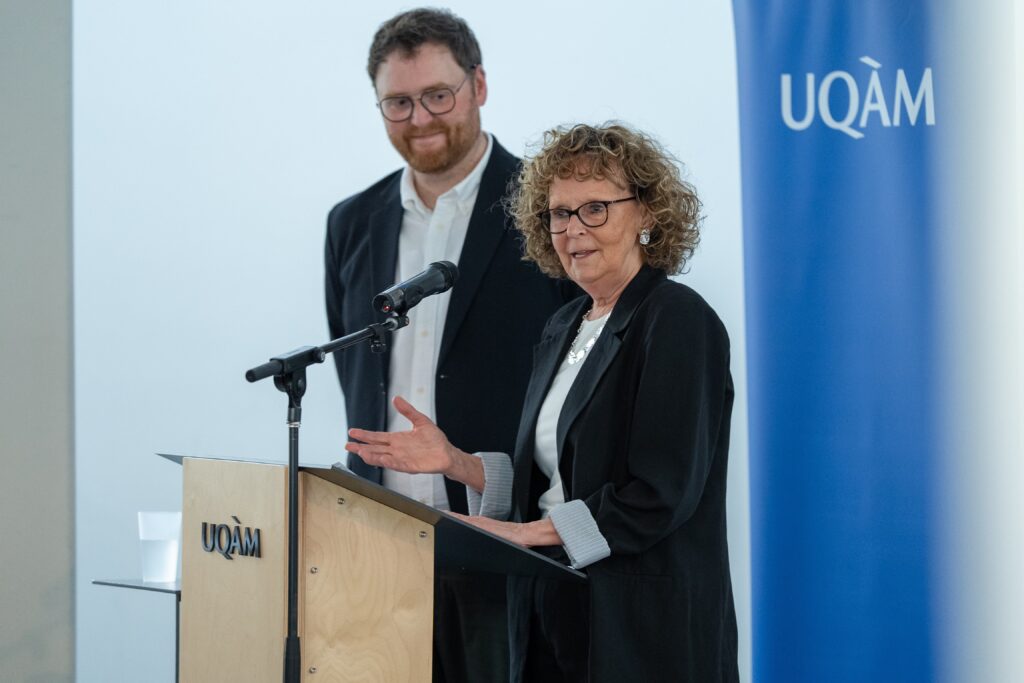
Pictures : Clémence Lesné
November 27, 2025 – Scott J. Davidson nominated for and winner of the 2025 Nobel Peat Prize!
Congratulations to Scott J. Davidson, winner of the 2025 Nobel Peat Prize for his project «Tracking the Colors of Peatlands» and for the appointment of his article The PeatPic project: predicting plot-scale green leaf phenology across peatlands in Environmental Research Letters at the Nobel Peat Prize 2025, presented by the McMaster Ecohydrology Lab!
November 21, 2025 – Michelle Garneau recipient of the 2025 ACFAS Michel-Jurdant Award
Congratulations to Michelle Garneau, winner of the 2025 Acfas Michel-Jurdant Prize!!
Her expertise in peatlands as ecological and climatic archives and their essential role in carbon sequestration contributes to highlighting the importance of wetlands in combating climate change.
«Dedicated and passionate researcher, Michelle Garneau stands out for her research work, the lasting impact of which contributes to the advancement of science, education, and public policy.» This distinction has notably been the subject of articles published in the Duty and on UQAM News.
November 20, 2025 – Peatlands are essential for our ecosystems, but they are often overlooked and understudied.
«Entitled The PeatPic Project, our study used smartphone photography to collect data. We reached out to researchers specializing in peatlands from around the world via social media and word of mouth, and asked them to collect images of their peatlands in 2021 and 2022. As a result, we collected more than 3,700 photographs from 27 peatlands located in 10 countries.»
«The PeatPic project inspired us to create another community science initiative called Tracking the Colour of Peatlands (Tracking the evolution of peatland color). This project involves 16 peatlands located around the world and invites the public to take photos at different times of the year from fixed points to create a picture of the ecosystem's changes over the seasons.»
October 24, 2025 Plot-scale vegetation phenology in peatlands: insights from the PeatPic Project
« All core datasets, including processed greenness indices and site information, are now openly available. This allows other researchers to reuse the data for phenological analysis, model calibration, or integration with carbon flux, hydrological, or biodiversity datasets. The published paper provides full methodological detail and links to data archives, supporting reproducibility and enabling further development of the approach.»
October 14, 2025 – Harnessing technology and global collaboration to understand peatlands
«Our study, called The PeatPic Project, used smartphone photography to collect data. We connected with peatland researchers around the world via social media and word of mouth and asked them to collect photographs of their peatlands during 2021 and 2022. We gathered more than 3,700 photographs from 27 peatlands in 10 countries.»
«The PeatPic Project inspired us to create another community science project called Tracking the Colour of Peatlands. In this project, fixed points at 16 peatlands worldwide will be used. Members of the public can take photos of the peatlands at different times to help us build a picture of how the ecosystem changes throughout the year.»
July 19, 2025 – Peatlands, unsung allies against the climate crisis
A Radio-Canada digital feature follows Professor Michelle Garneau, accompanied by some of her students and Professor Scott Davidson, as they collect samples from the wooded peat bog at Lac-à-la-Tortue.
« Peat bogs, they've always been seen as a nuisance. It's not easy to walk through them, you don't really know what to do with them.
, explained Mrs. Garneau, who has been studying these ecosystems for over 30 years. However, they help us sequester greenhouse gases, such as CO2 and methane, which we wouldn't want in the atmosphere.
»
June 2, 2025 – Welcome Scott J. Davidson to the University of Quebec at Montreal!
Scott J. Davidson is the new Associate Professor in Wetland Carbon Dynamics and Co-holder of the CARCLIQUE Research Chair in the Department of Biological Sciences at the Université du Québec à Montréal (UQAM). Scott J. Davidson becomes a member of the Geotop and of GRILL.